Why Grey-Blue Wallpaper Changes Under LEDs: A Sample-and-Mockup Lighting Method
At three in the afternoon, the wall reads as calm slate beside the window. After sunset, one downlight pulls it green and the dimmed bedside lamps push it toward violet. The client still wants dependable grey-blue walls, but which version is being approved?
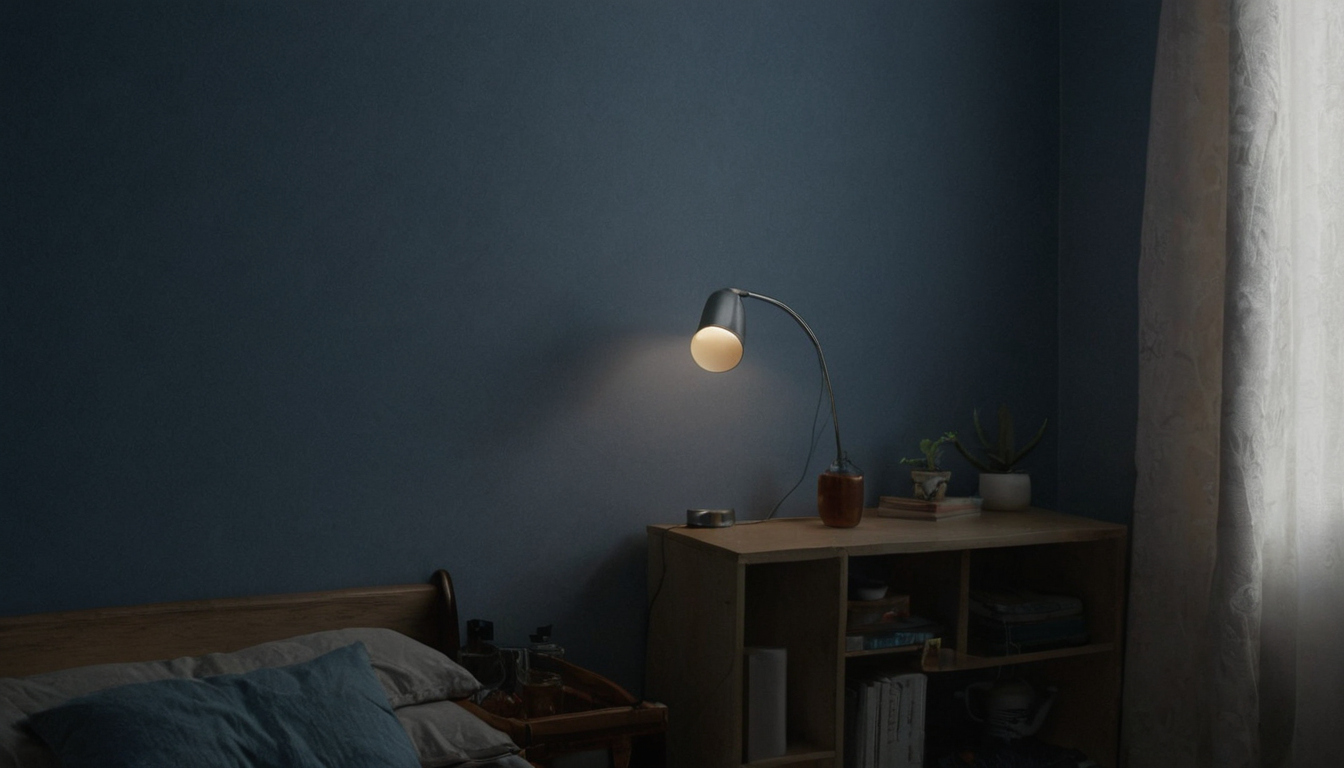
Why Grey-Blue Wallpaper Changes Under LEDs: A Sample-and-Mockup Lighting Method shown with practical context cues.
Grey blue wallpaper cannot be approved from a loose swatch or a CCT label. The reliable method is an installed mockup tested under the actual LED sources, controls, daylight conditions, viewing positions, and reflected views. This costs more than reviewing a memo sample, but it reduces the larger risk of replacing wallpaper, lamps, drivers, or controls after installation.
Why does grey-blue wallpaper look different under different LED lights?
Grey-blue wallpaper changes under LEDs because its pigments and surface finish reflect each lamp’s spectral output differently. Sources with the same stated color temperature can create blue, green, violet, or flat-grey impressions, particularly at night, when dimmed, or across textured and pearlescent finishes.
CCT alone does not predict how grey-blue wallpaper will render
Correlated color temperature describes the chromatic appearance of nominally white light, not every wavelength contained in it. Penn State’s review of CCT use and limitations explains that CCT is one-dimensional and that two sources with identical CCTs can appear perceptually different. A 3000 K label therefore cannot establish whether an LED has enough spectral energy in the regions that reveal the wallpaper’s blue, green, or violet pigments.
Request spectral power distribution, CCT, chromaticity tolerance, lumen output, beam angle, dimming data, and color-rendering information for every source that reaches the wall. This includes downlights, linear lighting, decorative fixtures, and portable lamps. Chromaticity tolerance indicates expected source-to-source consistency, while spectral data help explain why fixtures with similar CCT and CRI labels still produce different results.
| lighting or material input | what the label reveals | what it misses | approval consequence |
|---|---|---|---|
| CCT, such as 2700 K, 3000 K, or 4000 K | General warm-to-cool appearance of nominal white light | Detailed spectral output and pigment response | Never approve wallpaper from CCT alone |
| CRI or a single rendition score | One summary of color fidelity | Hue-specific shifts, saturation changes, and preference | Compare broader rendition data and the physical mockup |
| SPD, optic, and dimming information | Wavelength distribution, beam control, and stated control behavior | The combined effect of room geometry and installed surfaces | Test the actual module, driver, dimmer, and aiming |
| Wallpaper color and finish description | Nominal color, texture, sheen, and possible metallic content | Batch variation, substrate influence, and directional reflection | Use the specified batch and hanging orientation |
ANSI/IES TM-30-24 guidance from the U.S. Department of Energy treats color rendition as related measures and graphics used together. TM-30 provides objective information that can support source comparisons and tradeoff decisions, but no metric guarantees that a client will prefer a particular grey-blue result. The reference Spectral Calculator computes TM-30 metrics from a light source’s spectral power distribution, reinforcing why source data matter.
The Department of Energy’s TM-30 tutorial says the method offers greater accuracy and a wider scope of information than predecessor color-rendition tools, while also requiring more knowledgeable and intentional interpretation. The practical lesson is not to chase one supposedly perfect score. Compare the complete source data and then judge the installed finish.
Surface sheen and texture change the apparent grey-blue balance
Wallpaper construction can alter the reading as strongly as pigment. Matte paper spreads light broadly, while vinyl coatings, mica, metallic inks, and pearlescent layers can create directional highlights. Embossed texture adds small shadows that deepen under narrow beams but soften under diffuse daylight. A grazing linear light may exaggerate seams and relief; a wider beam aimed more directly at the wall may make the same finish appear flatter and paler.
Approval must reproduce the room’s window orientation, glazing, principal viewing times, luminaire positions, beam angles, and normal sightlines. Record the manufacturer’s finish specification, intended hanging direction, and any protective coating that affects sheen or cleaning durability. The comparison applies only to the proposed residential room, not to a showroom lamp or screen image.
LED efficiency and service life can make source selection a long-term commitment. ENERGY STAR reports that qualified LED lighting uses at least 75 percent less energy and lasts up to 25 times longer than incandescent lighting. A color mismatch may therefore remain in the room for years unless the source or finish is changed.
Finish evaluation also covers installation products. The U.S. Environmental Protection Agency’s indoor-air guidance identifies building materials and furnishings, along with paints and related products, as common indoor sources of volatile organic compounds. Primer, adhesive, and coating choices should be recorded alongside their visual effect and installation requirements.
Once source and surface variables are understood, the next decision is physical scale: what size grey-blue wallpaper sample is reliable enough for lighting approval?
What size grey-blue wallpaper sample is reliable enough for lighting approval?
A loose swatch can screen out an unsuitable color, but final approval requires a large vertical mockup sized by the wallcovering manufacturer or project designer to show at least one complete pattern repeat, representative seams, texture, joints, and the way light spreads across the finished surface.
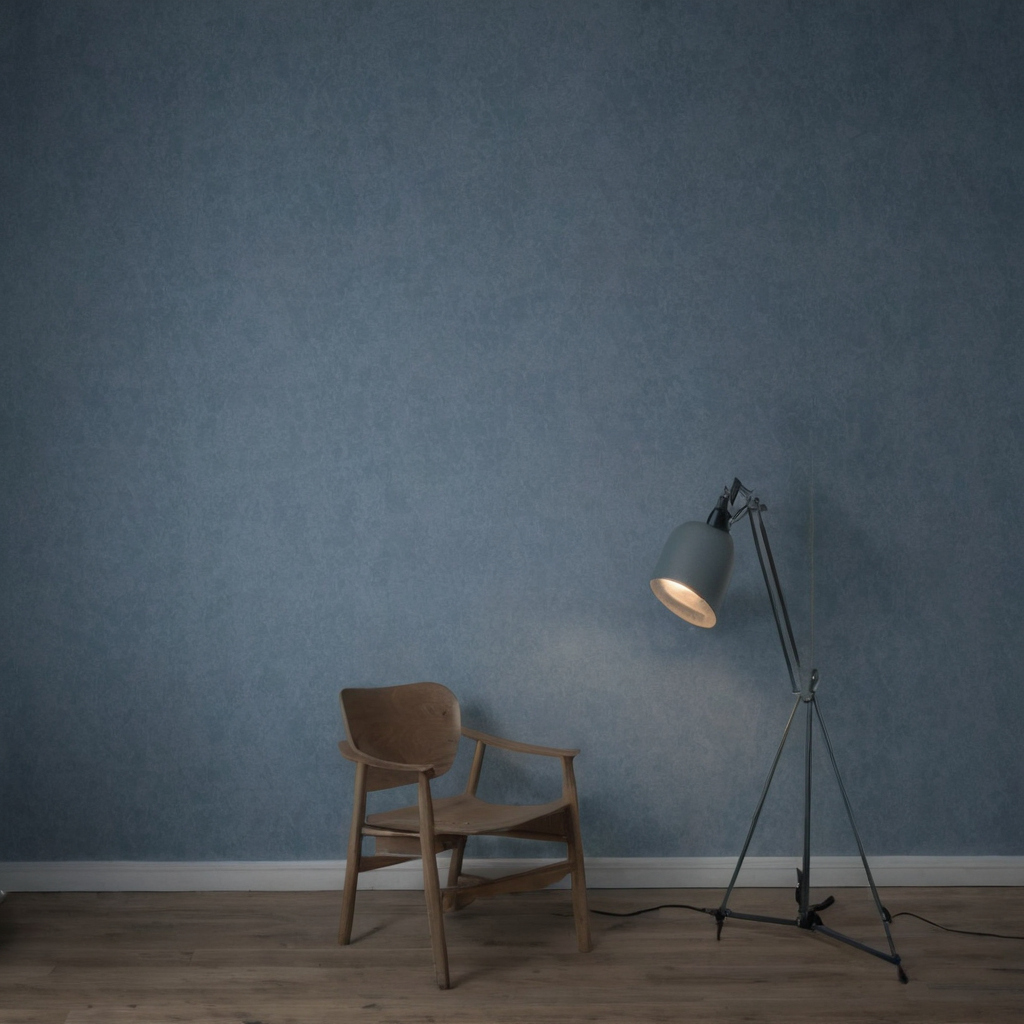
What size grey-blue wallpaper sample is reliable enough for lighting approval shown as an editorial planning reference.
The mockup must reproduce the final wall build-up
Build the sample where it receives representative daylight and illumination from the specified luminaires. A useful position includes a principal sightline and, where possible, a corner, joinery edge, or grazing-light condition that may expose texture and seam irregularities.
- Confirm the required dimensions. Use the manufacturer’s recommended mockup size or enlarge the panel until it contains the full pattern repeat, more than one drop where seams matter, and enough uninterrupted area to judge the grey-blue field rather than one motif.
- Prepare the specified substrate. Reproduce the final board, plaster, skim coat, lining paper, surface smoothness, porosity, cure condition, and base color. A bright white backing can make a translucent paper read differently from a grey primer.
- Apply the specified system. Use the approved primer, adhesive, trimming method, seam treatment, and installer technique. Record compatibility requirements from the wallcovering and adhesive manufacturers.
- Resolve damp conditions first. For bathrooms, laundry rooms, exterior walls, or other damp locations, do not cover active moisture. The EPA guide to mold and moisture advises fixing condensation and wet or damp spots promptly to prevent mold growth.
- Price the mockup as project work. Allow for a sample roll, substrate preparation, installer labor, adhesive, removal, and replacement material rather than expecting a loose memo sample to carry the approval.
The wallpaper batch and hanging orientation must be recorded
Grey-blue wallpaper approval applies only to the material and hanging method tested. Record the product reference, batch or dye lot, roll number, pattern direction, roll sequence, and whether the manufacturer requires straight hanging, reverse hanging, or pattern matching.
- Pass: The mockup uses production-representative material from an identifiable batch.
- Pass: Arrows, repeat dimensions, seam positions, drop order, and installer method appear on the approval record.
- Pass: Procurement reserves sufficient material from one batch, with overage calculated for repeat, wall dimensions, defects, and future repairs.
- Fail: The sample is horizontal, backed with an unapproved board, missing seams, or assembled from unidentified offcuts.
- Fail: The final order permits an untested batch, adhesive, primer, or hanging direction without renewed review.
Once the installed mockup passes these checks, the next decision is how to test the grey-blue wallpaper across daylight and LED scenes.
How should grey-blue wallpaper be tested across daylight and LED scenes?
Grey-blue wallpaper should be reviewed in the intended room through a repeatable scene matrix, not during one convenient visit. The matrix should cover representative morning and afternoon daylight, every programmed electric-light scene, and practical dimming levels, with curtains, furniture, and adjacent finishes approximating the completed room.
A scene matrix makes the wallpaper comparison repeatable
Record the date, time, weather, window orientation, glazing tint, blind position, active luminaires, dimming level, and observer position. Include flooring, ceiling paint, joinery, upholstery, metalwork, and trim samples because reflected color can alter the apparent balance of grey and blue.
| Scene | Daylight | Lighting and level | View | Decision |
|---|---|---|---|---|
| Daytime | Morning or afternoon, blinds open and closed | Electric lighting off | Entry and principal seating point | Record cast, contrast, and sheen |
| Evening ambient | None | Finished ambient scene at full and intermediate levels | Primary occupied positions | Pass, conditional pass, or fail |
| Late-night dimmed | None | Finished low scene at minimum stable output | Doorway, bedside, and mirror | Check green or violet shift |
Agree on the decision definitions before viewing. A conditional pass should identify the required correction, such as a revised blind position, luminaire aim, scene level, or source specification. Seasonal daylight limits should be recorded rather than guessed.
Low-level dimming must be tested with the final driver and controls
Test the specified luminaire, LED module, driver, dimmer, and control protocol together. Compare full, intermediate, and minimum stable output against manufacturer dimming curves and compatibility documents, then watch for flicker, stepping, dropout, color shift, and mismatch between adjacent sources.
The Illuminating Engineering Society described TM-30-18 as a comprehensive color-rendition method and a revision of TM-30-15. That source-level analysis can inform the trial, but the final approvers should still attend critical scenes or sign the recorded results. Even after the direct wall passes, floor mirrors may reveal a different wallpaper color or a reflected luminaire that dominates the view.
Floor mirrors can change the approval view of grey-blue wallpaper
Floor mirrors do not alter the wallpaper, but they can alter the observer’s judgment by showing the grey-blue surface from another angle alongside reflected luminaires, windows, flooring, and furniture. Test the reflected view whenever a mirror controls a dressing area, bedroom composition, wardrobe, or major room sightline.
The mockup record should identify the mirror dimensions, frame depth, glass type, visible tint, available reflectance information, and intended mounting or leaning angle. Mark the mirror, wallpaper, windows, luminaires, and normal standing or seated eye positions on a plan and elevation. Confirm anchoring, anti-tip restraint, circulation clearance, and local installation requirements before testing.
Direct and mirror-reflected wallpaper views must be judged separately
A grey-blue wallpaper that looks balanced directly may appear darker, greener, or less textured in a floor mirror because the reflected sightline changes the angle between the light, surface, and observer. Mark separate observer positions and record the mirror’s distance and angle relative to the wallpaper wall.
Review every scene in which the reflection will normally be seen. Keep separate approval notes for hue, brightness, texture, glare, and visible seams. Take direct and reflected photographs from fixed positions as records only. Camera processing, screen settings, and mirror glass can conceal differences that remain obvious in person.
Reflected luminaires can overpower the wallpaper color
Bright lamp images, unshielded apertures, or windows inside the mirror can reduce the eye’s sensitivity to the subtler grey-blue finish. A dark floor reflected beside the wall can also make the wallpaper appear brighter or cooler by comparison.
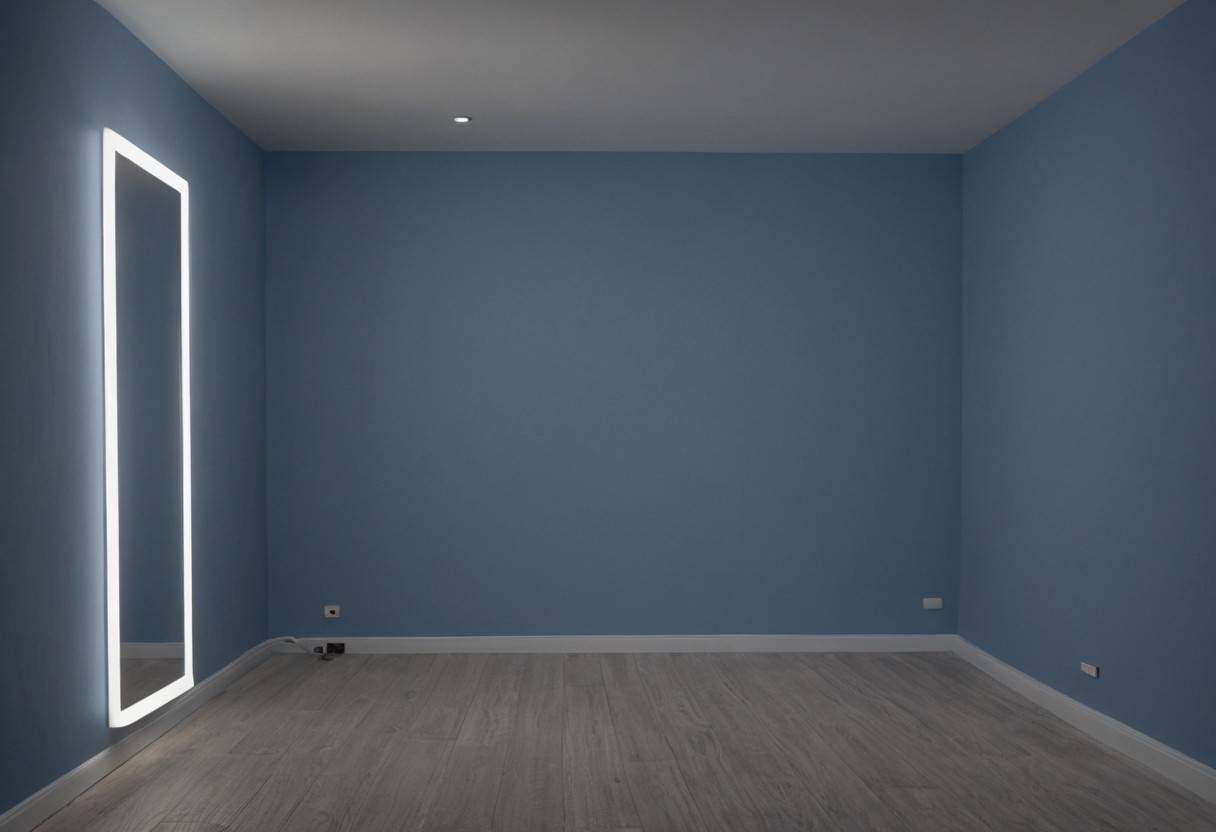
Floor mirrors can change the approval view of grey-blue wallpaper shown with practical context cues.
- Check principal standing and seated sightlines with blinds open and closed.
- Record luminaire aiming angles, shielding, and any visible source image.
- Compare full-output, dimmed, daytime, and evening scenes.
- Correct failures by re-aiming, adding shielding, adjusting scenes, or repositioning the mirror.
Coordinate these checks with guidance on color fidelity and CCT at floor mirrors and floor-mirror angles, placement, and safety. Once both views pass, the next question is how the grey-blue wallpaper mockup should be measured and documented.
How should the grey-blue wallpaper mockup be measured and documented?
The grey-blue wallpaper mockup should have controlled observations, fixture data, scene settings, consistent photographs, and a named approval decision. Calibrated instruments can strengthen comparisons on color-critical projects, but neither measurements nor ordinary phone photographs replace the authorized decision-maker’s final in-person judgment.
Controlled photographs document differences but do not approve color
For every scene, record the LED source model, stated CCT, dimming level, daylight and blind condition, observer position, sample batch, and decision. If a spectrophotometer, colorimeter, illuminance meter, or flicker meter is used, record its model, calibration status, measurement geometry, operator, and method so another reviewer can repeat the test.
- Lock white balance, exposure, lens, focus, and camera position.
- Place the same neutral reference target beside the wallpaper without hiding its texture.
- Disable automatic white balance, filters, portrait modes, and automatic enhancement.
- Retain original files and document every crop or processing adjustment.
- Record the approver’s name, approval date, signed sample, batch, and selected scene.
Camera spectral response, image processing, ambient screen conditions, and uncalibrated displays can all alter the recorded grey-blue. Photographs are useful for comparing scenes and tracking decisions, not for approving exact color remotely.
Color-rendering data should extend beyond a single CRI number
Source documentation should include spectral power distribution where available, CRI and relevant special indices, plus manufacturer-reported TM-30 fidelity, gamut, and hue-bin information. TM-30 treats related measures and graphics as a system rather than one preference score. A lighting specialist should connect those results to the wallpaper pigments, sheen, and adjacent materials.
The record should distinguish manufacturer data, calibrated site measurements, and visual observations. For historical context, the IES position on TM-30-18 explains that three modifications aligned the method with CIE 224:2017, including changes affecting color evaluation samples, the reference-illuminant transition zone, and the fidelity scaling factor. The revisions produced only small effects for typical sources, and the resulting Rf calculation became identical to the CIE 224:2017 General Color Fidelity Index Rf.
Metrics support comparison, but the installed wall remains the approval standard. Once the evidence and signed sample agree, the next risk is timing: grey-blue wallpaper approval should occur before final lighting procurement and installation.
Grey-blue wallpaper approval should occur before final lighting procurement and installation
Final approval should connect one wallpaper batch and wall build-up to the specified luminaires, drivers, controls, scenes, and room conditions before bulk ordering and lighting procurement. The completed room then requires verification after installation, aiming, furnishing, and control commissioning.
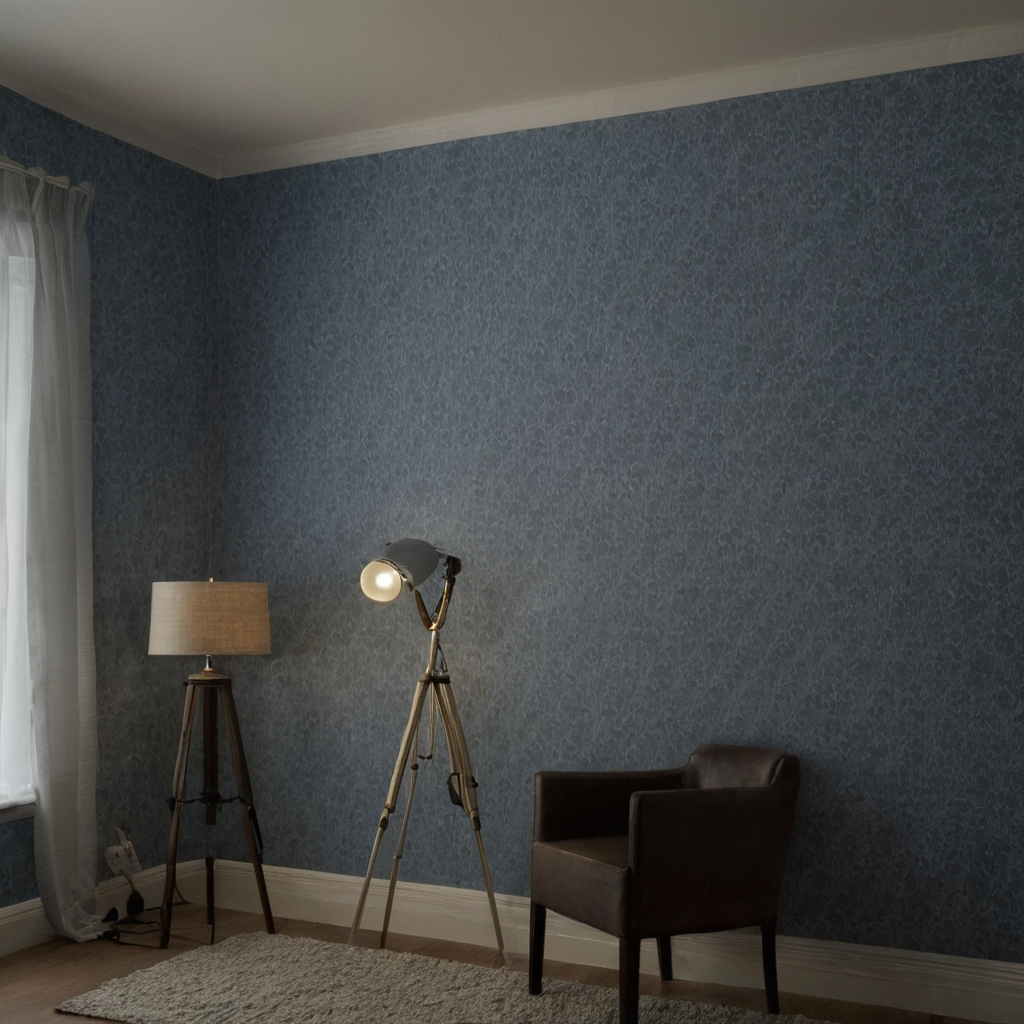
Grey-blue wallpaper approval should occur before final lighting procurement and installation shown with practical context cues.
A finish approval schedule prevents untested substitutions
- Fix the sequence: Receive samples, build the vertical mockup, run the lighting trial, record approval, procure wallpaper and lighting equipment, install the finish, commission the lighting, and verify the completed room.
- Record the approved combination: List the wallpaper product, colorway, batch, hanging orientation, substrate, primer, adhesive, luminaire, LED module, driver, CCT, optic, dimmer, and control protocol. Store a signed control sample where the contractor and installer can access it.
- Check procurement exposure: Confirm lead times, return restrictions, reserved wallpaper stock, replacement components, and repair-roll quantities with each supplier before releasing orders.
- Control substitutions: Retest any change to the source spectrum, CCT, optic, driver, dimmer, wallpaper batch, adhesive, primer, or substrate. A matching product description does not prove matching visual performance.
- Assign authority: Identify who proposes, reviews, installs, programs, and signs off changes across the designer, lighting designer, supplier, installer, electrician, controls programmer, contractor, and client.
Where primers or adhesives emit volatile organic compounds indoors, follow product instructions and increase ventilation during use, consistent with EPA indoor-air guidance.
The installed room requires a final verification scene check
- Compare direct and mirror-reflected wallpaper views with the signed mockup in each approved daylight and evening scene.
- Check seams, shade variation, wall grazing, glare, flicker, driver compatibility, luminaire aiming, and programmed dimming values.
- Test the room with curtains, furniture, mirrors, and replacement lamps in their final positions.
- Correct lighting aim or scene values first, mirror alignment second, installation defects third, and replace material only when the signed finish itself is inconsistent.
The practical approval rule is simple: sign off a documented finish-and-light combination, not a loose grey-blue wallpaper swatch or an informal preference.
Grey-blue wallpaper and LED lighting FAQ
Is 3000 K or 4000 K better for grey-blue wallpaper?
Neither CCT is automatically better. A 3000 K source may soften the blue or reveal a green undertone, while a 4000 K source may make the finish appear clearer, cooler, or flatter. Compare the actual sources under the room’s daylight and evening scenes before choosing.
Can two LED lamps with the same CCT make grey-blue wallpaper look different?
Yes. Two lamps can share a CCT while having different spectral power distributions, color rendition, chromaticity, optics, and dimming behavior. Those differences can change which pigments and surface highlights remain visible.
How large should a wallpaper sample be before approving it under LEDs?
The sample should be large enough to show a complete pattern repeat, more than one drop where seams matter, and a substantial uninterrupted field. It should be installed vertically with the proposed substrate, primer, adhesive, orientation, batch, and installer method.