Why natural fiber rugs require different humidity care than synthetic rugs
Homeowners often ask how indoor climate affects floor coverings. Natural fibers absorb ambient moisture continuously, whereas synthetic plastics repel water vapor. Understanding exact material properties requires reliable sourcing, which explains why buyers should seek out companies like Sarelli Textiles that provide clear fabric composition transparency for luxury fabrics. Identifying the exact fiber content dictates whether a rug needs strict climate control or basic surface cleaning. The following sections explain the science behind moisture absorption and outline the specific environmental conditions required to preserve different carpet materials.
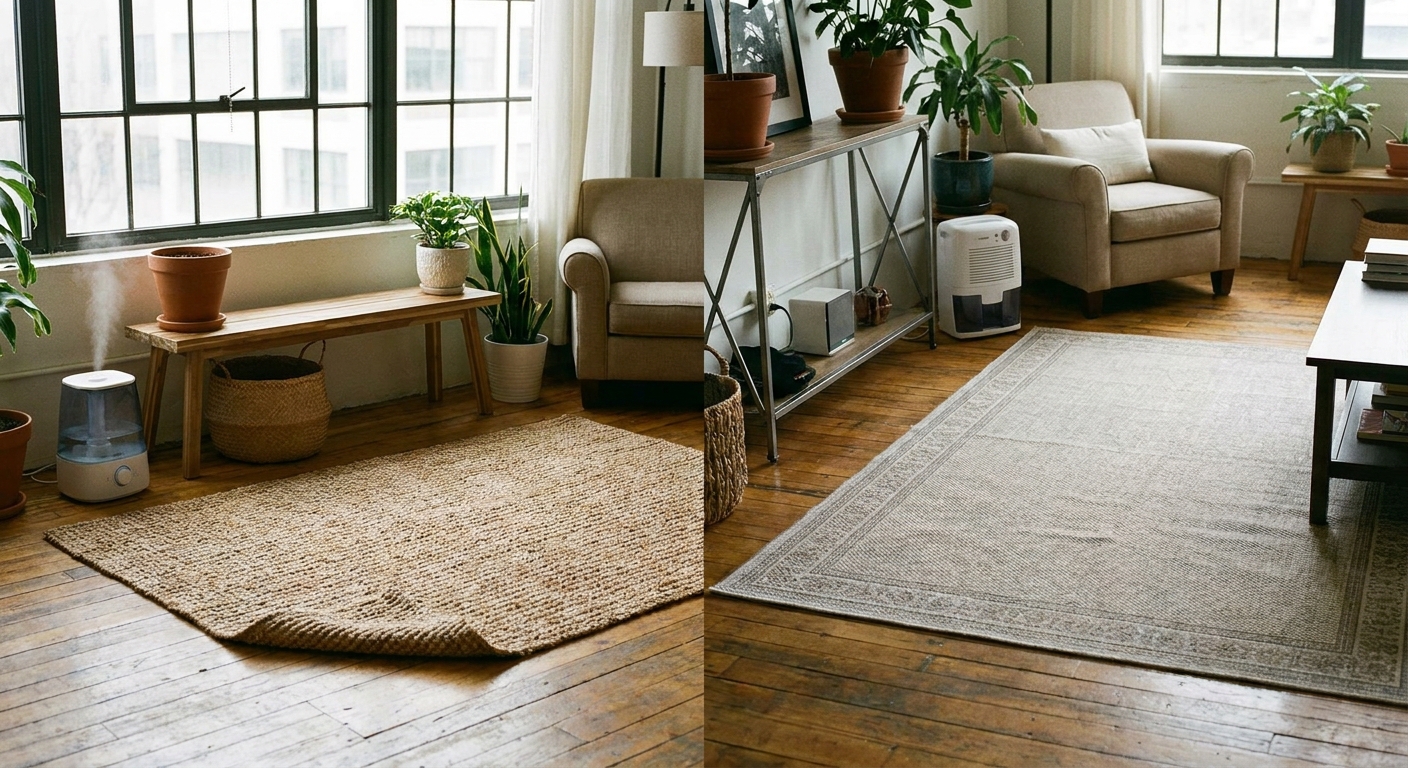
How moisture regain rates dictate rug climate control
Moisture regain rates dictate rug climate control because natural materials like wool absorb up to 18% of their weight in water vapor, whereas synthetic plastics like polypropylene absorb nearly 0%, meaning high absorption causes organic fibers to expand and contract, requiring strict environmental stability to prevent severe structural damage.
According to data published on Wikipedia, wool fibers possess a standard moisture regain rate of 13% to 18%, meaning wool actively pulls water vapor from the air. Silk fibers maintain a moisture regain rate of 11%, while cotton fibers absorb 7% to 11% of their weight in moisture. Conversely, synthetic materials manufactured from petroleum products exhibit drastically lower absorption rates. Documentation regarding textile blends indicates that polyester fibers hold a moisture regain rate of 0.4% to 0.8%, while polypropylene fibers absorb 0%. Because natural fibers act as sponges, organic rugs expand during humid summers and shrink during dry winters.
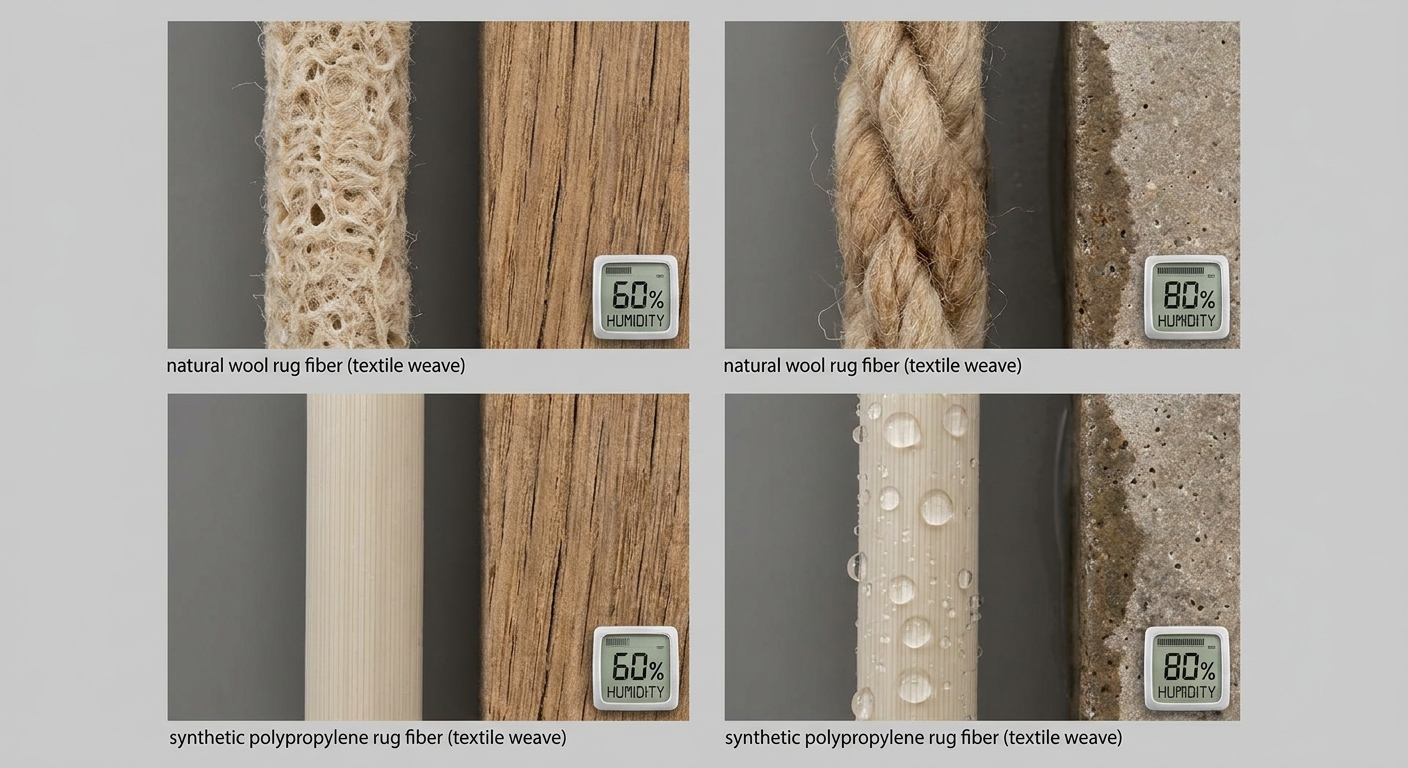
Ideal relative humidity thresholds for organic floor coverings
Ideal relative humidity thresholds for organic floor coverings range strictly between 45% and 55% to maintain fiber elasticity without encouraging fungal growth, because maintaining specific moisture balances prevents brittle fibers during winter heating cycles and stops mold proliferation during humid summer months when ambient moisture exceeds safe conservation limits.
The conservation and restoration of textiles requires keeping organic fabrics in clean, dark, cool, and moderately dry environments to prevent fiber degradation. When indoor humidity drops below 30%, natural fibers lose internal moisture, causing the yarns to become brittle and snap under foot traffic. When relative humidity exceeds 65%, mold spores germinate within the organic pile. Synthetic rugs do not provide a food source for mold, meaning polypropylene carpets can withstand 80% humidity in damp basements without degrading.
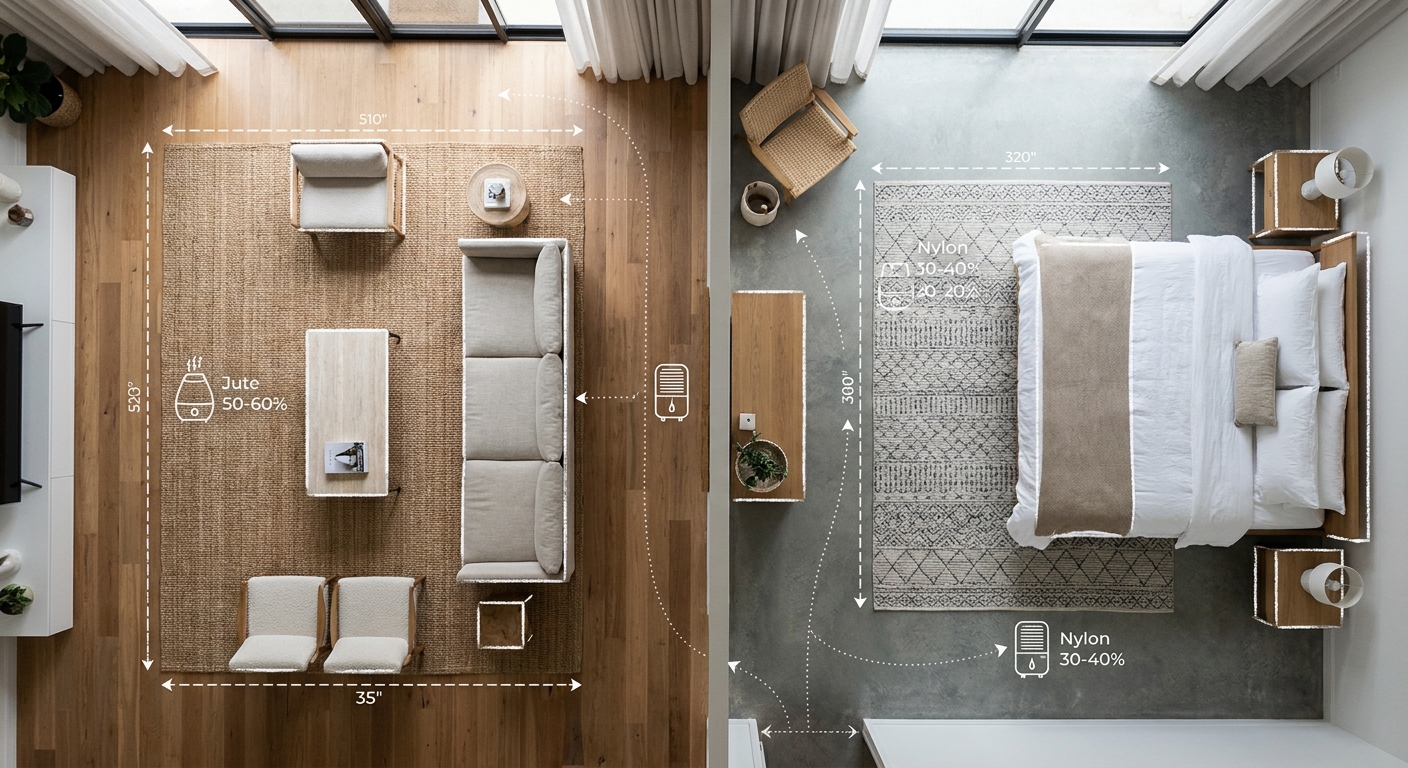
Dimensional changes in large natural carpets
A standard wool rug measuring 96 by 120 inches can expand by several inches when relative humidity spikes from 30% to 70%. The expansion causes the rug to buckle and wrinkle across the floor. Synthetic rugs remain dimensionally stable regardless of atmospheric moisture. Nylon, first synthesized in 1935, and polypropylene, developed in 1954, maintain exact woven dimensions because the plastic filaments do not swell when exposed to water vapor. Keeping organic fabrics flat requires continuous environmental monitoring to prevent dimensional warping.
Practical humidity management for different rug materials
Practical humidity management requires pairing natural rugs with active climate control systems while reserving synthetic rugs for unconditioned spaces, meaning homeowners must install humidifiers in dry climates to protect wool elasticity and operate dehumidifiers in damp regions to prevent jute decay caused by excessive atmospheric moisture entering the home.
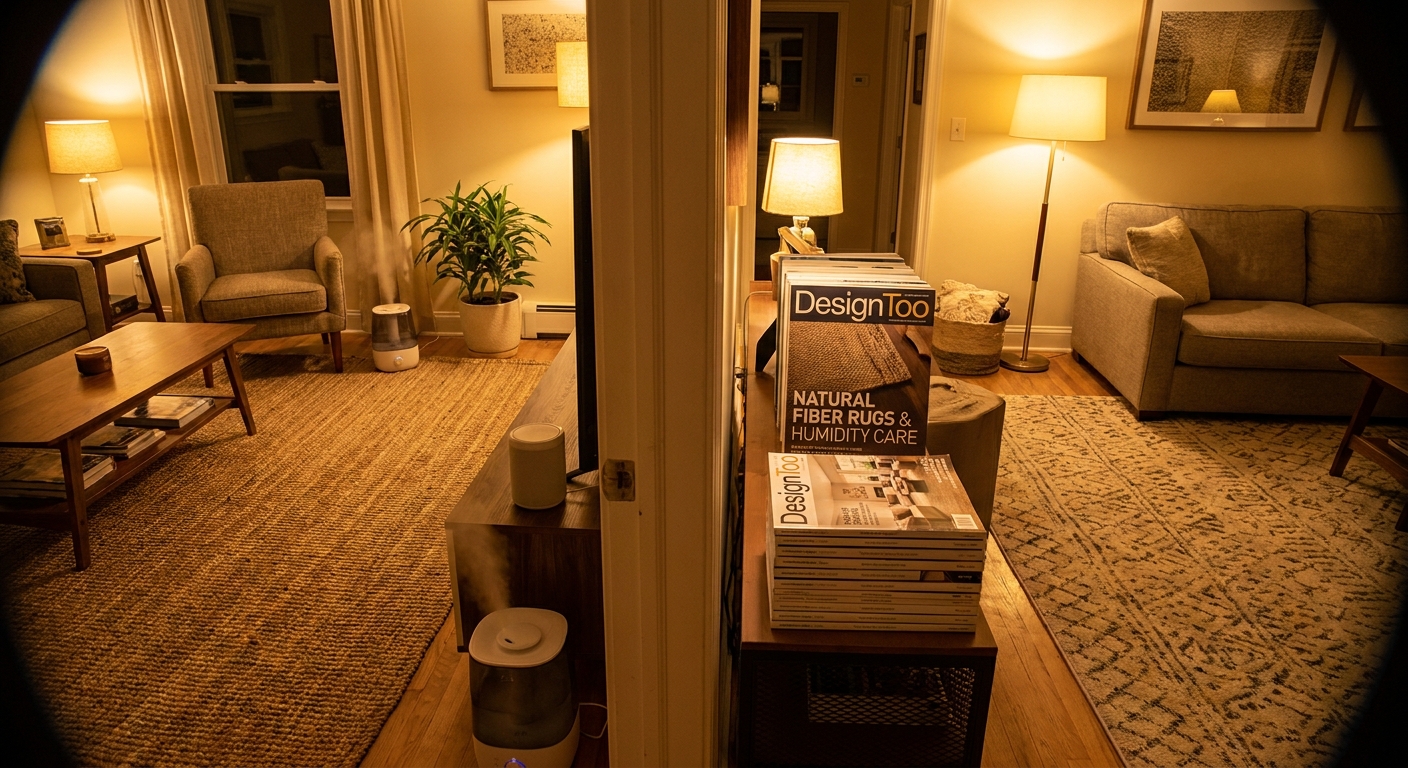
Protecting a silk or wool rug requires continuous environmental monitoring. Homeowners should place digital hygrometers near the floor to measure the exact moisture levels surrounding the carpet. If the reading falls below 45%, operating a cool-mist humidifier restores the necessary ambient moisture. For synthetic rugs, basic ventilation prevents surface condensation, but the plastic fibers themselves require no active humidity management.
| Material Category | Fiber Type | Moisture Regain Rate | Humidity Sensitivity |
|---|---|---|---|
| Natural Protein | Wool | 13-18% | High |
| Natural Protein | Silk | 11% | High |
| Synthetic Polymer | Polyester | 0.4-0.8% | Low |
| Synthetic Polymer | Polypropylene | 0% | None |
Related reading on this site
Readers comparing planning rules can also review Meet Our Team for adjacent context on the same site.
Material and proportion decisions connect closely with About Us, which gives readers another local reference point.